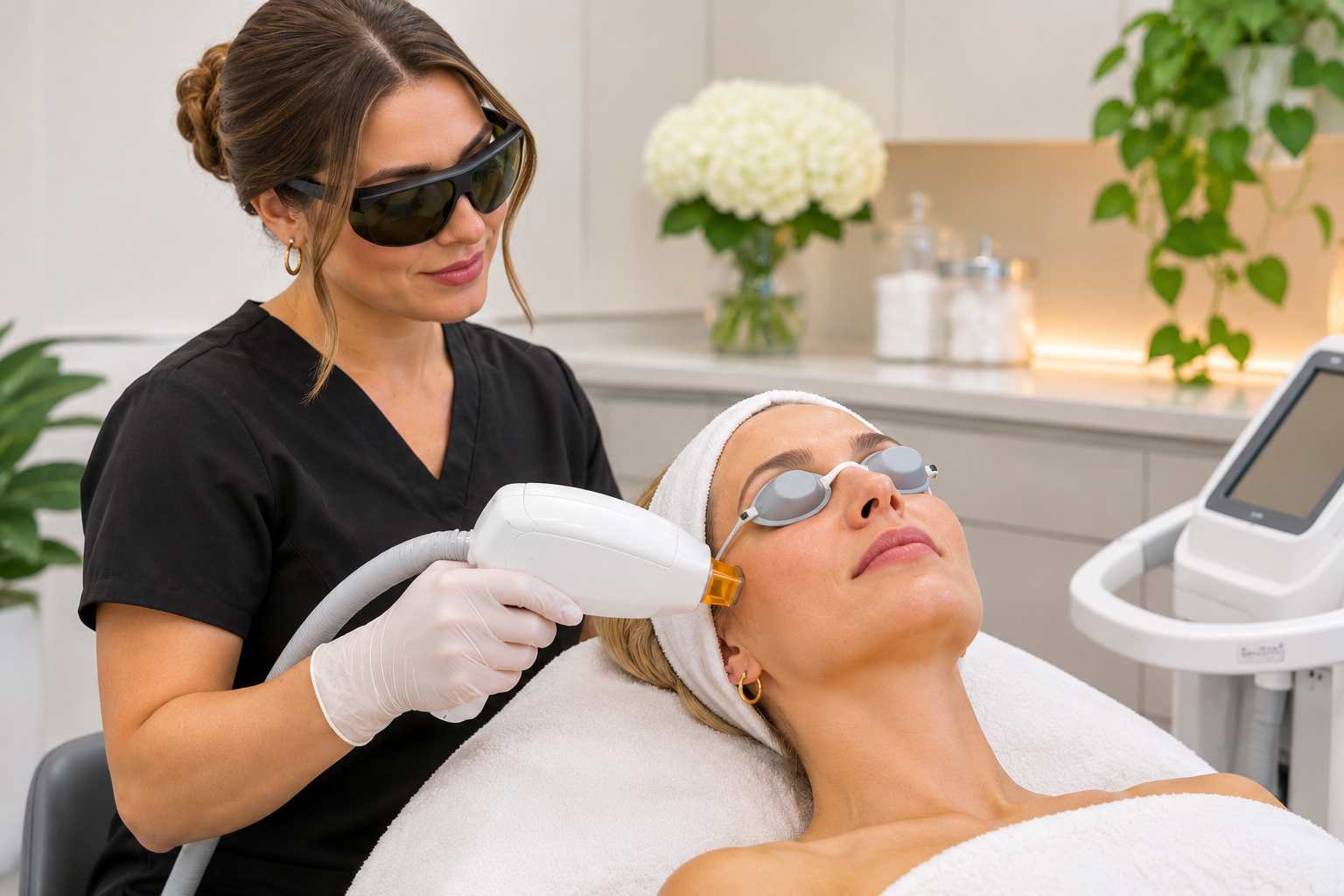
Choosing an aesthetic device starts with your concern. Brown spots and redness often respond to light-based treatments like BBL, rough texture and sun damage may call for laser resurfacing like HALO, loose or crepey skin may suit radiofrequency microneedling like Morpheus8, and unwanted hair is the job of laser hair removal. At NurturHer Aesthetics in Fitchburg, Wisconsin, a provider evaluates your skin tone, history, and goals before recommending any device.
"Laser" has become a catch-all word, but not every device is a laser. Some use broadband light, some use radiofrequency energy, and some use heat and muscle stimulation. Understanding the difference helps you set realistic expectations and choose the right path.
What is the difference between lasers, light, and radiofrequency devices?
Lasers use a single, focused wavelength of light. Broadband light devices like BBL use a range of wavelengths. Radiofrequency devices use electrical energy that creates heat in the tissue rather than relying on light.
NurturHer's Lasers & Devices menu includes several of these technologies:
- HALO Skin Resurfacing, a hybrid fractional laser that combines ablative and non-ablative wavelengths.
- BBL Photofacial, a light-based treatment for visible redness and pigmentation.
- BBL for Acne, a targeted light-based therapy for acne.
- Morpheus8 Skin Tightening, which combines microneedling with radiofrequency energy.
- Laser Hair Removal for long-term hair reduction.
- MOXI, a non-ablative fractional laser for uneven tone, texture, and early signs of aging.
- PHYSIQ Body Contouring, which combines deep heat with electrical muscle stimulation for body contouring.
Which device treats which skin concern?
The best device is the one that matches the target. Pigment, blood vessels, collagen, hair follicles, and surface buildup each respond to different technologies.
Sun spots, freckles, and redness
BBL Photofacial uses pulses of light absorbed by pigment and blood vessels. Treated brown spots often look darker before they flake or fade. A series may be recommended for broader discoloration or redness.
Rough texture, fine lines, and years of sun damage
HALO resurfacing removes damaged surface skin with ablative wavelengths while non-ablative wavelengths work deeper to support collagen and improve tone. It may help with fine lines, sunspots, enlarged pores, uneven texture, and acne scarring.
Mild laxity, crepey skin, and acne scars
Morpheus8 delivers radiofrequency energy beneath the surface through a matrix of microneedles, prompting collagen and elastin remodeling. It may help with mild laxity, fine lines, texture, acne scars, and enlarged pores on select areas of the face or body.
Active acne
BBL for Acne targets inflammation and acne-causing bacteria and may help limit post-inflammatory darkening. It is often part of a broader acne plan rather than a standalone fix.
Dullness and early sun damage
MOXI is a non-ablative fractional laser that supports skin renewal rather than mechanically buffing away surface buildup. NurturHer’s booking menu lists it for pigmentation, sun damage, uneven tone and texture, and early signs of aging, with treatment settings and recovery tailored to your skin.
Unwanted hair
Laser hair removal targets follicles during their active growth phase. Because hair grows in cycles, a series of sessions is needed, and results are long-term hair reduction rather than guaranteed permanent removal.
How much downtime do device treatments have?
Downtime ranges from almost none to one to two weeks. It depends on the device and the intensity of your treatment settings.
MOXI and laser hair removal generally have minimal downtime. BBL may cause temporary redness, warmth, and darkening of spots that flake off. Morpheus8 can cause redness, swelling, and small pinpoint marks for several days. HALO is the most involved of these: expect redness and swelling for a few days, with dryness possible for one to two weeks and pinkness that may last two to four weeks. Your provider can adjust settings to fit your schedule.
How do different lifestyles shape a device treatment plan?
Device plans work best when they fit your schedule, budget priorities, and comfort with recovery.
Gen Z and younger adults
Younger clients often seek treatments for acne, post-acne marks, and unwanted hair. BBL for Acne and laser hair removal are common starting points. This is also the best time to build strong sun protection habits, since prevention is far easier than correcting sun damage later.
Busy and stressed working professionals
If time off is not an option, start with low-downtime treatments such as MOXI or laser hair removal, and book more intensive treatments like HALO before a long weekend or a lighter work week. Many Wisconsin clients also plan resurfacing for late fall and winter, when shorter days and less sun exposure make aftercare easier.
Luxury and high-end clients
For a comprehensive rejuvenation strategy, devices are often layered with injectables and skincare. A plan might include BBL for tone, HALO or Morpheus8 for texture and firmness, and maintenance treatments to protect results. Ask your provider to outline a seasonal treatment calendar.
Men
Men frequently seek device treatments for sun damage, acne scarring, and back or chest hair. Thicker skin and facial hair can influence device selection and settings. NurturHer's NurturHim line includes lasers and devices aimed at skin, hair, and body concerns.
Women
Women may notice new pigment changes during pregnancy, with hormonal shifts, or after years of sun exposure. Melasma, in particular, can worsen with some heat-based treatments and requires careful planning. Many device treatments are postponed during pregnancy, so share that information with your provider.
Are lasers and light treatments safe for darker skin tones?
Some are, with the right device and settings, but darker skin tones carry a higher risk of pigment changes and burns. Careful assessment is essential.
NurturHer notes that HALO settings are tailored to each patient and that not every skin type or pigmentation concern is right for light-based treatment like BBL. Recent tanning, certain medications, and a history of melasma or post-inflammatory hyperpigmentation can all affect candidacy. A trustworthy provider will sometimes recommend a different treatment, or a test spot, rather than proceeding.
What are the risks of device-based skin treatments?
All energy-based treatments carry risks, including temporary redness and swelling, and less commonly burns, blistering, infection, scarring, or lasting pigment changes. Risk depends on the device, settings, skin type, and aftercare.
Protecting your eyes during treatment, avoiding sun exposure, and following aftercare instructions carefully all reduce risk. Be wary of any provider who promises no downtime, guaranteed results, or permanent outcomes. Honest answers about risk are a sign of a careful practice.
Is body contouring the same as weight loss?
No. Body contouring is designed to refine shape and tone in specific areas and is not a weight-loss treatment.
PHYSIQ combines deep heat and electrical muscle stimulation to target stubborn fat and tone muscle. For people whose goals involve weight and metabolic health, NurturHer offers a separate medically guided Weight Management program.
Where can I get device treatments near Madison?
NurturHer's device treatments are performed at its Fitchburg office at 6317 McKee Road, which serves the greater Madison area. The practice also has a Sun Prairie office that sees clients by appointment, so confirm device availability for that location before booking.
What should I ask before booking a device treatment?
Ask which device your provider recommends, why it fits your concern, and what recovery will realistically look like. A clear answer to each question is a good sign you are in careful hands.
Helpful questions to bring to your consultation include:
- Is this treatment a laser, broadband light, or radiofrequency, and why is it the right match for my concern?
- How will my skin tone, sun exposure, and history of pigment changes affect the settings?
- How many sessions should I expect, and how far apart?
- What does recovery look like day by day, and when can I return to work, exercise, and makeup?
- Which medications, skincare products, or recent tanning should I pause before treatment?
- How will we measure progress, and what happens if results are slower than expected?
Write down your answers and bring photos of any spots or areas you want addressed. Good documentation helps you and your provider track change over time, which matters for treatments that work gradually.
Frequently asked questions about lasers and devices
Is BBL a laser?
No. BBL is a broadband light treatment, often grouped with intense pulsed light. It uses a range of wavelengths rather than a single laser wavelength.
Is Morpheus8 a laser?
No. Morpheus8 combines microneedling with radiofrequency energy. It delivers heat beneath the surface without using laser light.
Is laser hair removal permanent?
It provides long-term hair reduction. Some hair may regrow, often finer and lighter, and maintenance sessions may be recommended.
When will I see results from HALO?
Many people notice visible improvement within about a week, with further changes developing over weeks and months as collagen remodels.
Can I combine different device treatments?
Often, yes, when they are appropriately spaced. Your provider will plan the sequence and recovery time between treatments.
Pick Your Wavelength Wisely
Lasers, light, and radiofrequency each have a job to do, and the best result comes from choosing the tool that fits your skin rather than the one with the most buzz. With a careful assessment and a plan that respects your skin tone and schedule, device treatments can be a powerful part of your skin routine.
Book your device consultation online or contact NurturHer Aesthetics at (608) 313-5627 to schedule at the Fitchburg office.